An Infographic Overview of How mCommerce Is Changing the Game

Long gone are the days when people go from store to store with the hope of randomly getting in-stock products that they want, since with the invention of the Internet, everything is available and happens online.
Online shopping is proving itself to be the now thanks to its unmatched convenience, but with the rise of online shopping are the complexities that go with it.
I mean, what’s with all those terms that are being thrown around?
What is eCommerce? m-Commerce!?
How are they different?
There are a lot of questions that need answers for, which is why today in SimiCart weekly article, we’ll be clearing up some of them for you.
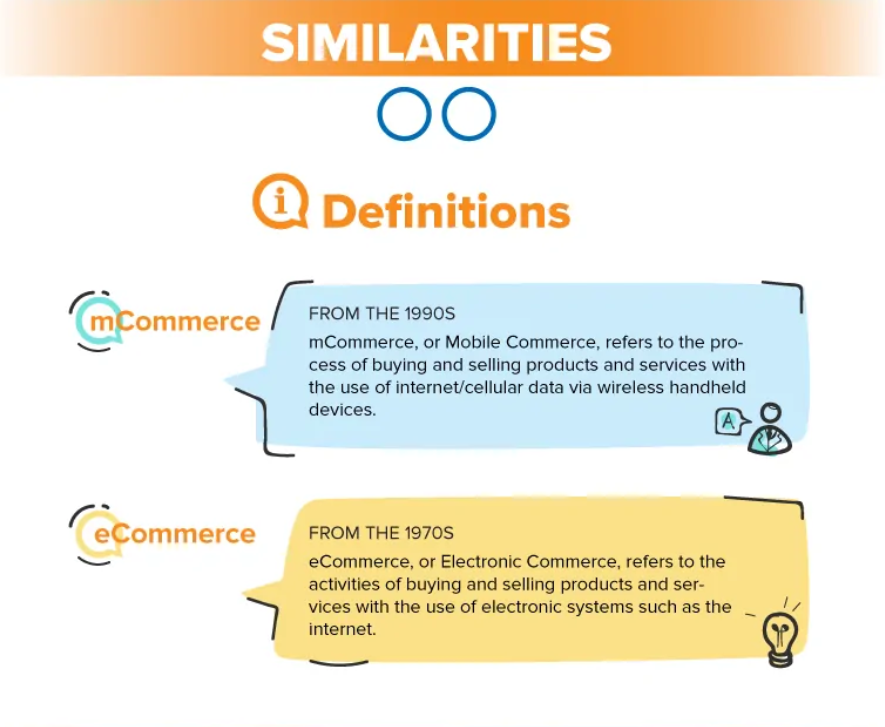
1. Definitions and How They are Alike
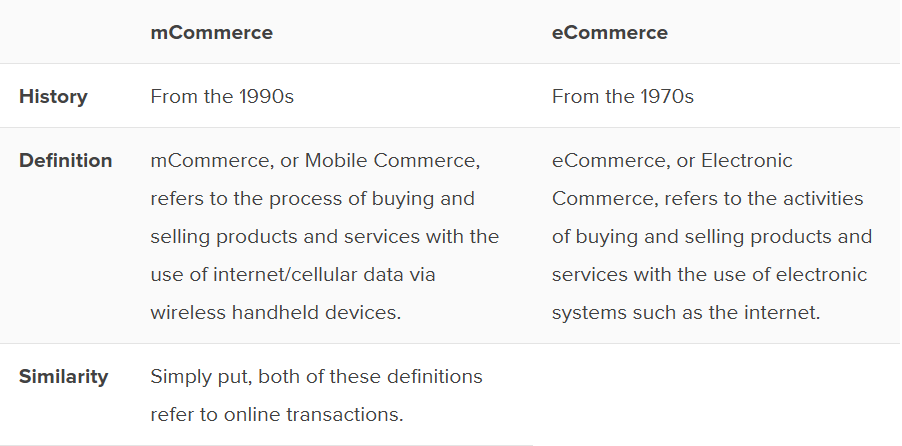
Pretty easy to grasp, isn’t it? It’s because of the benefits the eCommerce industry brings to its customers, in general, that we can find ourselves having an effortless online purchasing experience.
When was the last time you bought something from the Internet? Was it last week? Last month? Well, statistically, 96% of Americans have made an online purchase in their life, 80% in the past month alone. Those are big numbers indicating that online purchasing has since become an essential experience of our everyday life.
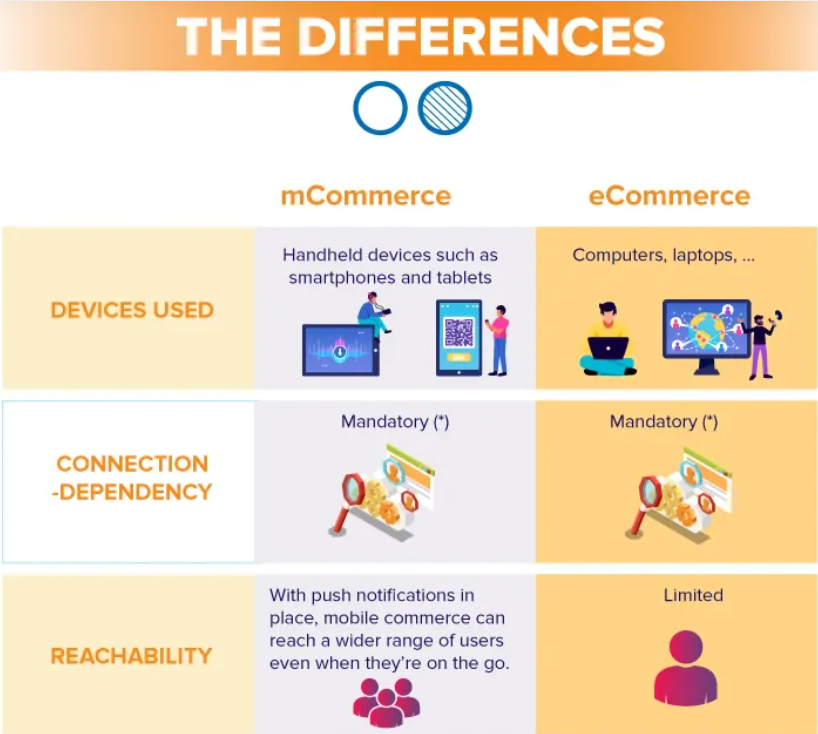
2. The Differences
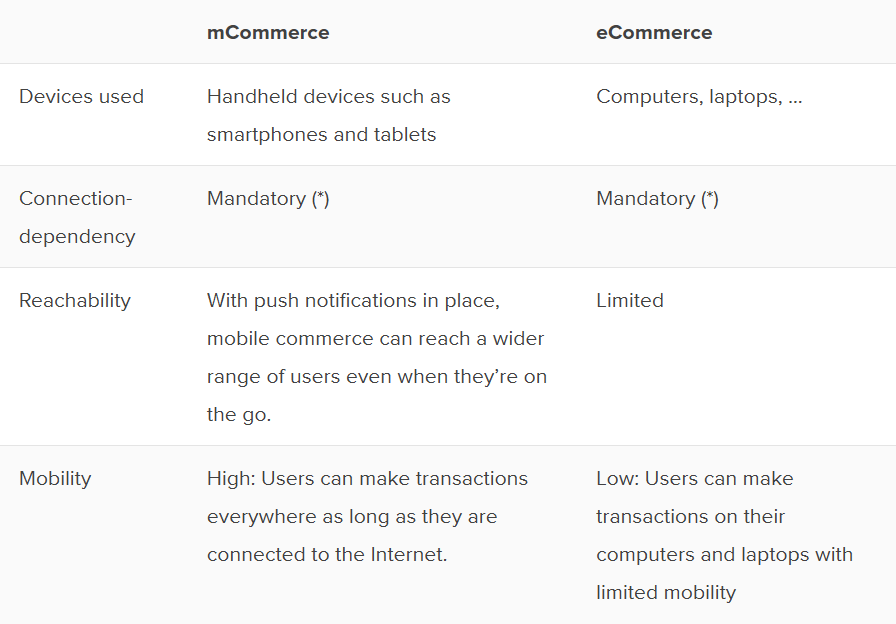
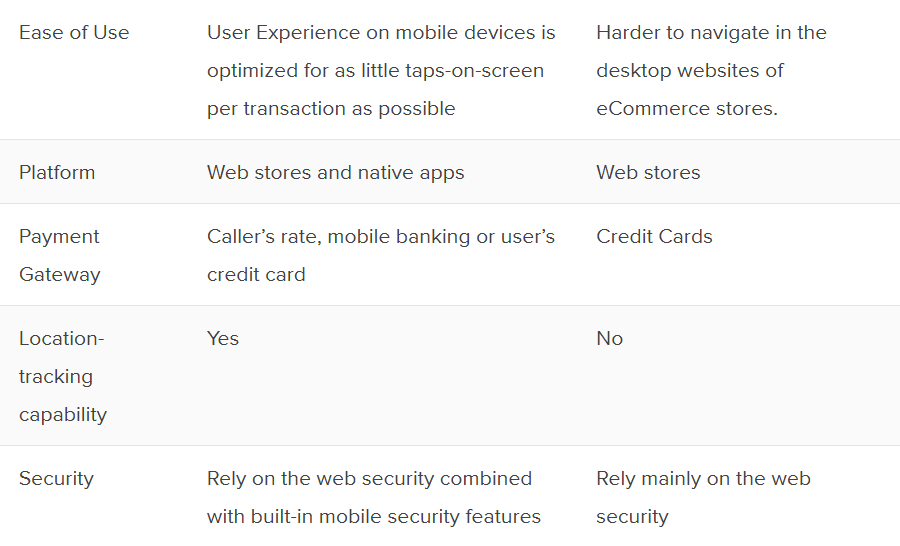
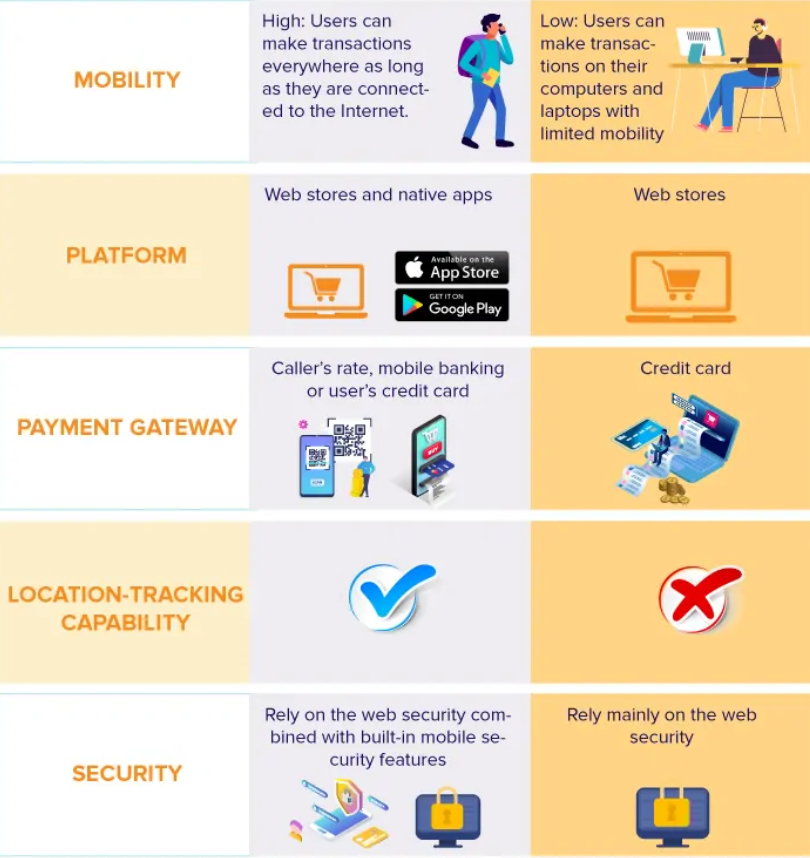
So how do they really differentiate from each other? There’s a lot more to dig into:
(*): Stores that are built with Progressive Web Apps are able to cache offline content, which in turns make them partly independent of connection.
Still a bit unclear? Maybe an infographic can sort things out for you:
3. Why mCommerce is The Future
Brick and mortar stores might have served the general needs well but, as we all know, changing time requires changing solutions, and mCommerce has proven itself to be this decade’s king of transactions.
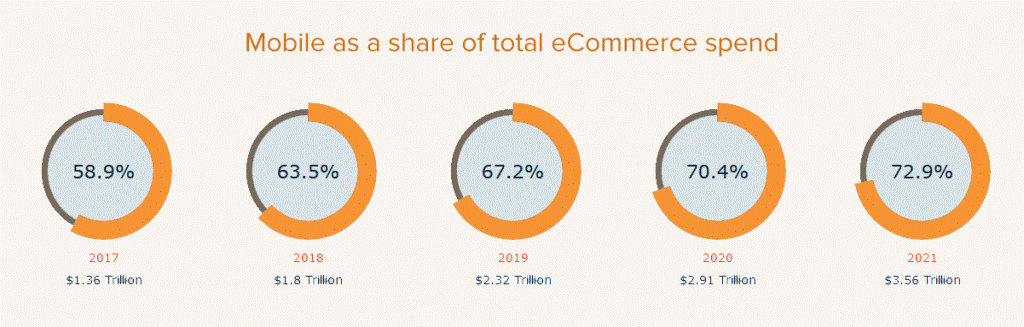
With an impressive year-on-year growth of 33.9%, mCommerce is expected to be the main channel of shopping in the future. To speak it in dollar’s terms, you can say that two out of every three dollars spent on online purchases are done through a mobile device.
4. Take Advantage of The Changing Trend
Now that we’ve had a firmer grasp of the matter, the next question is what should we do with this information. So what, we’re just gonna go ahead and create a mCommerce store? Well, no. As it currently is, stores still have both websites and native applications. One is for expanding discoverability, and one is for retaining of users — mCommerce belongs to the later.
If you’ve already had the foundation needed to create a store of your own, our professional solution is that you should go for a Magento Progressive Web App since it is the current go-to approach for brands that need a cross-device shopping experience.
At its core, Progressive Web App (PWA) is still a web but with all the best from native applications, perfectly suitable for the eCommerce world where installations of apps often drive customers away.
What’s on the horizon for m-Commerce
Oh, the future of mCommerce is bright. Like sunglass-required bright.
As of now, there are plenty of promising technologies that are still in limited use but will revolutionize your shopping experience when it’s the norm. Here are a few that come to mind:
1. Image Search
Powered by Artificial Intelligence, image search is set to revolutionize your shopping experience by making everything easier for you. With image search, you can now search part of an image, search with your cameras, with augmented reality applications or built-in image search features.
H&M utilize Snap & Choose & Shop to streamline the shopping experience
2. Virtual Reality Stores
Should VR headsets be a part of mCommerce? The answer varies—but it’s somewhere between “Yes” and “Maybe”.
Not very long now, your VR headset will be your companion wherever you go, since the experience that VR Stores bring is set to be transformative, futuristic and unlike anything you’ve experienced before.
Furnish in real scale with IKEA’s Virtual Reality Store
3. Voice Shopping
With the rise of intelligent assistants such as Siri or Alexa, you can be assured that the way people use voice searches are set to change as the technology matures. Compared to years ago, people are now getting increasingly familiar with voice searches, to the point of over 40% of the US adults now use voice search once a day.
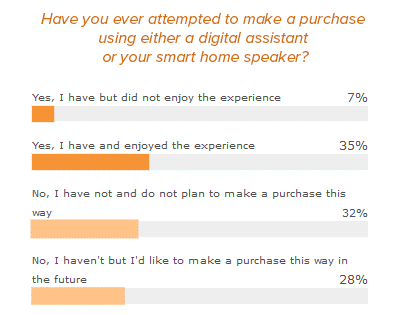
Source: Microsoft Voice Report
Those are impressive numbers, and even more so impressive is the fact that, to a large majority of people, voice-activated speakers are now considered a part of their daily life and is just as important as a smartphone:

Source: Voice-Activated Speakers: People’s Lives Are Changing
Back to the previously mentioned disadvantage of mCommerce, can we expect voice search to replace the human touch that mCommerce (and eCommerce in general) is lacking? The answer is very likely, as users of voice search are already reporting a high sense of comfortability found in intelligence assistants. For now, let’s keep our fingers crossed that the future will turn out to be the better. 🤞
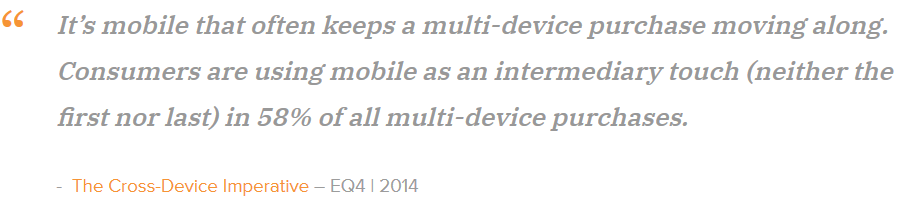
If anything, the future seems to call for an omnichannel shopping experience, which means that users might begin their customer journey on their desk/lap-top but end on their smartphone.
And if omnichannel is the key to the retail future, it seems that one thing you can’t ignore is the rise of Progressive Web Apps. With headless commerce becoming the norm, it’s unsurprising to see brands taking advantage of the PWA approach which has been demonstrated time and time again to boost revenue and increase time-per-session.
Original Publication Courtesy – www.simicart.com/blog